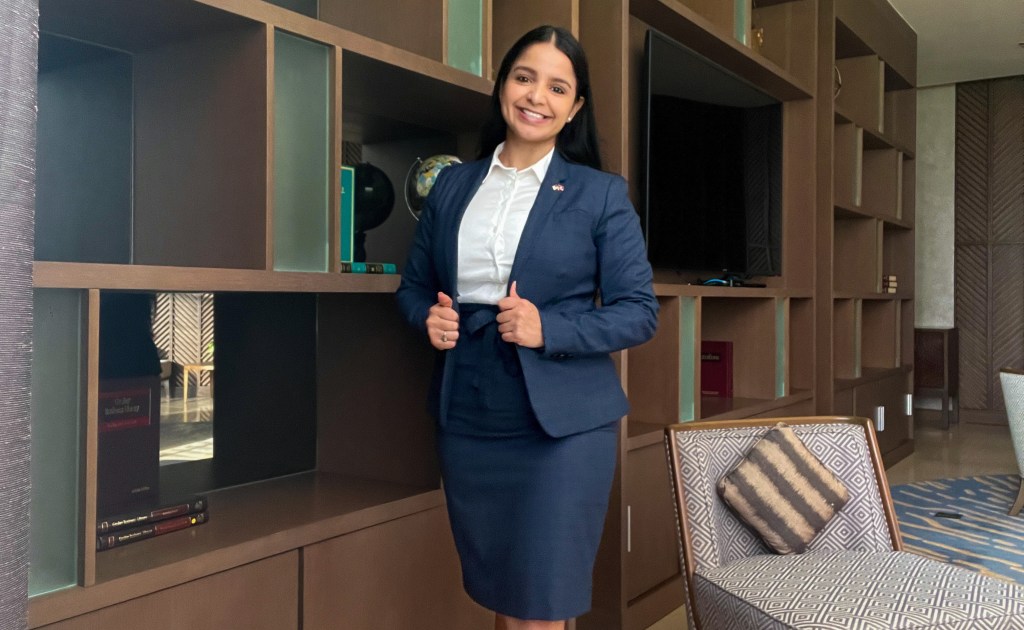
What do you think about when you hear, “the consular section” of an Embassy? Let me start by saying the consular section does much more than just adjudicating visas. There are two subsections – American Citizen Services and Visas.
In case you don’t know, the #1 priority of a U.S. Embassy is to assist U.S. citizens who are living or traveling overseas. And as Consular Officers, we do this every day! However, aside from helping U.S. citizens, we also change people’s lives by adjudicating visas.
In general, most people only know about one section of the Embassy – the consular section. The consular section is the only section that interacts with the general public on a daily basis. And on many instances, we are the first ‘Americans’ that locals ever meet and perhaps the only interaction they’ll have with someone from the United States. Therefore, as a consular officer, it is imperative that we make a great first impression.
In the foreign service, everyone is required to do at least one consular assignment – specifically in either the first or second assignment overseas. Some officers, who do not choose the consular career track, are not thrilled about this requirement but I think it is a great idea. The consular section is generally considered the biggest section at the embassy, it deals with topics that we should all know about as Diplomats, and it embodies the mission of the State Department! Truthfully, whether you work in the political, economic, public diplomacy, or management sections – foreigners will inquire about visas and other services. Hence, I think it’s crucial that we all serve in the consular section at least once.
Since I work at a small Embassy, I have the opportunity to experience all aspects of consular work. My first year, I was in charge of the American Citizen Services (ACS) portfolio.
- This means that if the police arrested an American for doing something foolish (getting into a fight, not paying rent, stealing, selling drugs, etc.), they would call me. I was not there to get them out of trouble but to ensure they have equal rights, they are safe, and to ask if they want me to contact their family in the United States. We also visit U.S. citizens in prison, which can be scary sometimes – particularly in developing countries.
- If a U.S. citizen passed away, the hospital or police would call me. Subsequently, I would have to deliver the tragic news to the family in the U.S.. This was definitely the hardest thing I had to do, particularly when you have to tell a parent that their son or daughter committed suicide!
- If a destitute U.S. citizen needed help getting back home, I would assist them. Unfortunately, this is not a free service. The Embassy offers repatriation loans to help people who don’t have the financial means to return home. This is available to everyone; whether they simply ran out of money because of poor decisions or because they were a victim of crime.
- If a U.S. citizen lost their passport or it was stolen or it expired – they would come to the Embassy and our team helps them get an emergency passport (different color and fewer pages than the regular passport). Most embassies from other countries do not provide this service but we do. We can print an emergency passport in a few hours.
- If a U.S. citizen in the United States contacted our Embassy and said they were worried about the welfare of a family member who’s currently living or traveling in Laos, I would work with my staff to try to find the U.S. citizen and determine if there is anything that we could do to assist.
- I also helped people with notary services; to renew their passports; and to obtain a certificate of birth abroad for their children that are born overseas.
- In the case of any emergency such as natural disasters or the COVID-19 pandemic lockdown, the consular section is the one leading the evacuation of all U.S. citizens who want to return home. The Embassy also has a messaging system (STEP) where we share important news with U.S. citizens in the host country — if they registered to receive our messages.
This second year, I’ve been in charge of the visas portfolio. Visa work is interesting but also mentally exhausting. This portfolio includes immigrant and non-immigrant visas.
- Immigrant visas are for applicants who are being petitioned by someone in the United States, such as a family member or a company.
- Non-immigrant visas are temporary visas to travel to the United States for tourism, school, a work meeting, etc.
As a Visa Chief, I analyze visa demand and staffing levels, forecast availability, and schedule visa appointments months in advance. Additionally, I answer correspondence from congress, U.S. citizen petitioners or their lawyers, and other government agencies.
Besides all these standard job tasks, I launched the American Citizen Services Facebook page in order to keep all U.S. citizens informed while they are living or traveling in Laos. Additionally, I’m in charge of monitoring posts and managing the page on a weekly basis.
Overall, as an entry-level consular officer, generally you’re spending mornings at the visa window and your afternoons responding to emergencies from U.S. citizens, doing administrative work, working on a last-minute visa request from a local government official, going to meetings, or doing other projects that you volunteered for or you were “volun-told” for.
As the old DOS saying goes: you either love ACS or visas. I would say there are pros and cons to each but since I thoroughly enjoyed ACS (despite all of crazy stories), I wouldn’t mind doing another tour with the ACS portfolio. What makes ACS so unique is that you have to constantly think on your feet, be ready for the next crisis, and help people in need. This goes without saying, ACS has the best stories!
Please do not be that American…Do not get in trouble while you’re overseas! In the event you find yourself in an emergency situation while you’re traveling overseas, know that the U.S. Embassy or consulate near you is there to help! 🙂
ລາກ່ອນ /la-gon/ = Goodbye! = Adiós!



 A Latina Diplomat's Journey
Leave a comment